We like to think of the ground beneath our feet as an absolute. We drive steel into the earth with the quiet confidence that once a marker is set, it stays put. But the soil is not a concrete floor; it is a slow-motion ocean, shifting and breathing across seasons and decades.
Over a twenty-year lifecycle, a solar array faces an unspoken, subterranean war. Weathering breaks down the structural cohesion of the subsurface, while heavy rains and shifting groundwater tables constantly alter the soil’s bearing capacity. Deep below, natural compaction and localized settling create invisible voids.
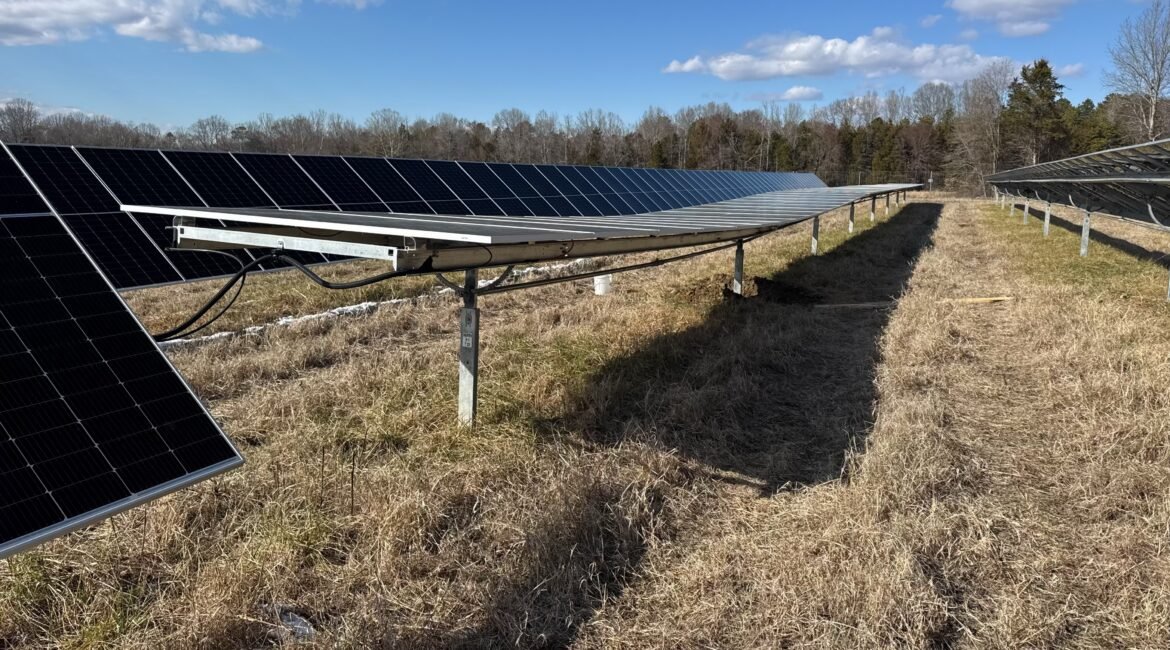
Then comes the winter, and with it, the quiet violence of the frost heave. When moisture in the ground freezes, it expands with enough hydraulic pressure to snap iron castings. Slowly, millimeter by millimeter, it pushes frost-displaced piles right out of the plumb line.
If an installer does not account for this natural choreography before they build, the elements will slowly reclaim the hardware.
The True Cost of a Misaligned Skeleton

When subsurface mechanics disrupt a pile’s alignment, it sets off a destructive domino effect across the entire tracker system. A single foundation post tilting just a few degrees puts immense torsional stress on the torque tubes and racking frames above.
Modules twist, micro-cracks form invisibly within the silicon wafers, and tracking motors draw excessive current as they fight against the binding steel.
What looks like a simple mechanical misalignment in the dirt quickly evolves into a systemic failure of the structural skeleton.
The Integration Principle: We do not defeat the frost heave or out-muscle the groundwater table. Instead, we map their boundaries. By understanding the mechanical limits of the local geology, we integrate our foundations deep enough to look the elements in the eye and anchor into a stable, unchanging subsurface.
The Pre-Build Dialogue: Listening Before We Drive
The absolute best way to survive the subsurface war is to avoid starting one. Pull-out testing shouldn’t just be used as an autopsy tool on a failing field; it belongs at the very genesis of the project.
Performing rigorous, calibrated pull-out testing prior to production pile driving transforms guesswork into an engineering blueprint.
By testing sample piles across the site’s unique micro-topographies before the heavy equipment rolls out, we reveal exactly how the earth will respond to tension, compression, and lateral loads. This upfront intelligence tells us precisely how deep the steel needs to go and what driving torque is required to bypass the volatile surface soil.
An ounce of prevention in the dirt eliminates millions of dollars in structural remediation later.
Subsurface Forensics: Auditing for Accountability

It is a common misconception that geotechnical pull testing can “fix” a solar site that is already failing. To be clear: it cannot.
If a site is already suffering from structural deformation, if the foundations have shifted out of alignment due to improper installation or unforeseen soil conditions, a pull test will not retroactively heal the steel. The physical damage to the mechanical skeleton is already done.
However, when an asset is failing, a post-build pull test shifts roles entirely, becoming a powerful tool for subsurface forensics.
When a plant begins to warp, owners and asset managers need to know why. A calibrated pull-out test allows us to mathematically isolate where the engineering execution fell short, providing the empirical data required to determine if the piles were under-driven or mismatched to the soil’s actual resistance.
In the world of insurance and liability, this empirical data is a game-changer. We don’t use testing to “cure” a broken site; we use it to establish the cold, hard facts needed to substantiate a claim, proving exactly where the original construction failed to meet the demands of the landscape.
Digital Stamps: Mapping the Surface Legacy

In the past, geotechnical data lived on rain-soaked paper clipboards, vulnerable to being lost or misread. Today, we map our physical execution to an unalterable digital ledger.
By locking our camera arrays to True North and overlaying precise coordinate formats, we tie our field performance numbers directly to global mapping files.
This transparent data trail transforms routine field labor into an audit-ready, decades-long asset record.
The Act of Stewardship
Post-build geotechnical testing is more than a quality control box to tick. It is an act of stewardship for the land, the investment, and the technology we place upon it. When we verify the exact structural resistance of a steel pile driven deep into the earth, we are protecting your long-term position.
Whether we are verifying foundations on day one to prevent a failure, or diagnosing an engineering shortfall on year ten to secure an insurance claim, we bring the truth to light.
A sustainable future can only be claimed if your foundation holds true.